Posing Practice for First-Time Bodybuilding Competitors
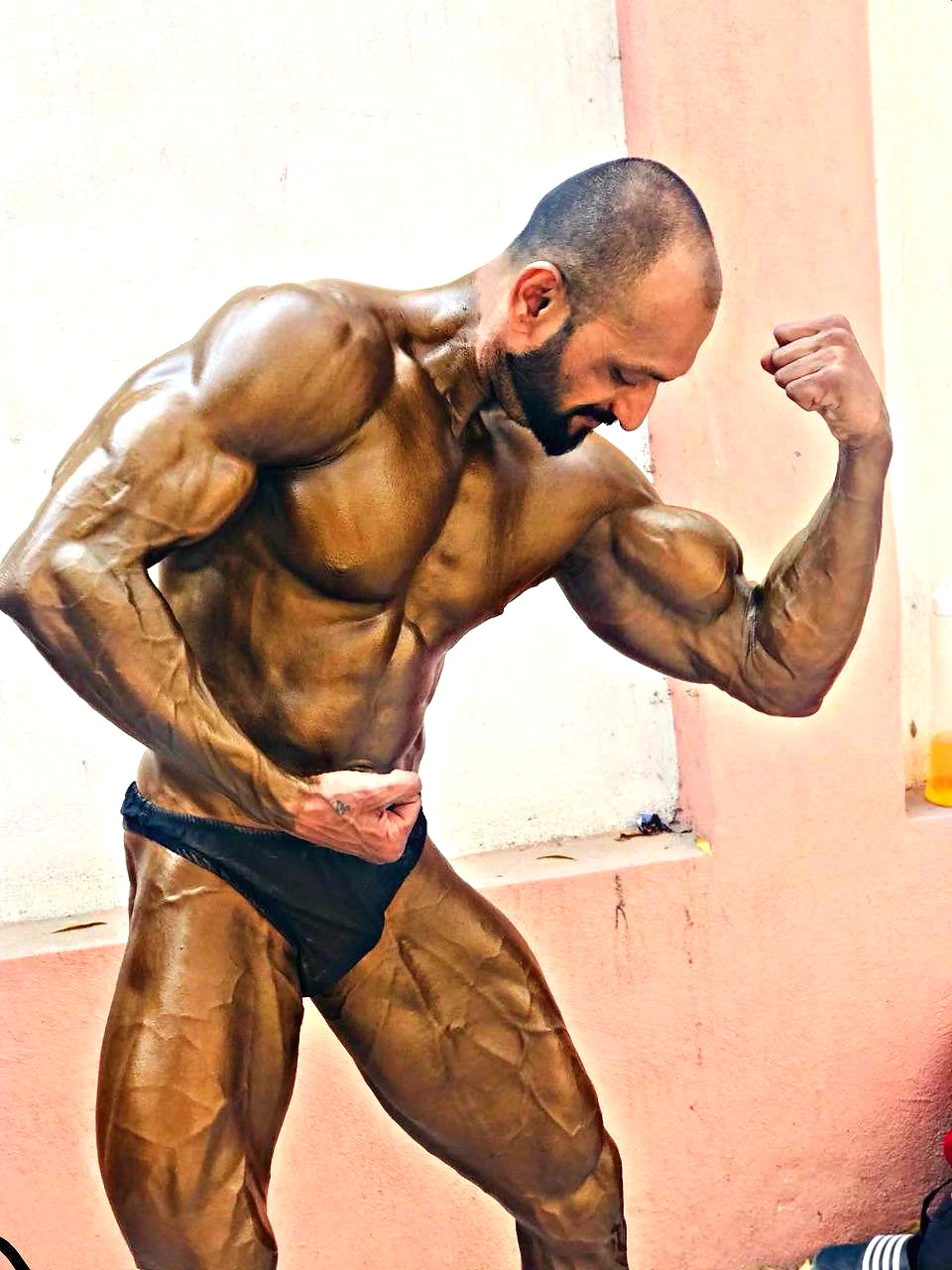
Posing is the skill most first-time competitors ignore until the final two weeks. Then they stand on stage, stiff and uncertain, wondering why their conditioning is not reading the way it did in the gym mirror.
My first meet was Bhavnagar in 2001. I had built a reasonable physique for my age and training age. I placed nowhere. Looking back, the conditioning was passable. The posing was not. I did not know how to hold a front double bicep for two full seconds without my arms shaking. I did not know where to put my feet in a quarter turn. I did not know that breathing matters.
Fifteen years later I stood on stage at the Mayor Cup in Vadodara and took first rank. Gujarat State came in 2016–17 and again in 2018–19. The Xotika Classic 2017–18 in Mumbai — an international event — followed. Twelve trophies across that run. None of that happened because I had better genetics than the other competitors. It happened because posing became a training discipline, not an afterthought.
This bodybuilding posing guide covers everything a first-timer needs. Mandatory poses, quarter turns, routine construction, a practice schedule, and the mistakes that cost placings on stage day.
Why posing matters as much as conditioning
Judges do not see the hours you spent under the bar. They see what you show them in two to five minutes of standing on a lit platform.
Two competitors can carry the same lean body mass and arrive at the same body-fat percentage. The one who can display that physique — widest lat spread, deepest vacuum, tightest glutes in the back double bicep — will outscore the one who cannot. That is not opinion. That is how comparative judging works under IFBB rules.
The gap between a well-posed average physique and a poorly-posed exceptional one closes faster than most beginners expect. A well-developed back that is never fully spread gives judges nothing to score. A side chest that never contracts fully reads as a flat chest from the judging table.
There is a second reason posing matters: stage composure. Competitors who know their poses stay calm under the lights. Those who are guessing their next movement show it on their face. Judges watch both the body and the presence.
Start your bodybuilding posing guide work ten to twelve weeks out. Not ten days. Ten weeks.
The mandatory poses — what each one reveals
IFBB Men’s Bodybuilding uses seven mandatory poses in the individual round. Classic Physique adds a vacuum pose. Men’s Physique stops at quarter turns and a front stance. This section covers the seven standard mandatory poses bodybuilding competitors are called to perform.
Front double bicep. Face the judges. Feet shoulder-width or slightly wider, one knee slightly forward. Both arms raised, elbows at shoulder height, fists clenched. Drive elbows back, not up. Flex the entire upper body — biceps, forearms, deltoids, chest, lats spreading outward, quads contracted, calves flexed. This pose reveals width, arm development, waist-to-shoulder ratio, and quad sweep simultaneously.
Side chest. Turn to the judges, presenting your stronger side first if you have a preference. The near arm is bent at roughly 90 degrees and pressed against your chest. The far hand grips the near wrist. Arch the chest upward by driving your shoulder toward your chin. Flex the far calf by pressing the ball of that foot into the floor. This pose shows chest thickness, arm fullness, and lower-body detail on the near side.
Back double bicep. Your back is to the judges. Both arms raised, same as the front version. The key difference: show the judges everything your back has. Elbows back. Lats spread wide — think of trying to touch the walls with your shoulder blades. One foot is pointed back, heel raised, to show calf detail and glute separation. This is the pose that separates well-developed backs from underdeveloped ones.
Side triceps. Turn sideways again, far arm behind your back, wrist gripped. Press the arm back and down to expose the triceps head. Arch the chest, contract the glute on the near side, flex the near calf. The triceps is the primary target, but a good side triceps also shows chest, shoulder, and quad from this angle.
Abs and thighs. Face the judges. Both hands locked behind or beside the head, elbows out. One foot forward. Exhale fully and contract the abdomen inward and upward. Bring the front quad forward and flex it hard. This pose exists to compare abdominal detail and quad sweep. A vacuum adds visual width to the waist contrast. Practice the exhale-and-contract motion separately until it is reflex.
Most muscular. The crab version is most common at the amateur level. Both arms drive forward and down, fists clenched near the thighs or crossed in front. The entire upper body contracts — traps, pecs, biceps, forearms, delts all firing at once. It is a high-risk pose because over-flexing looks cramped. A controlled most muscular shows overall mass and density without losing shape.
Front lat spread and rear lat spread complete the IFBB eight. These are sometimes called as separate mandatory poses bodybuilding judges will score. Hands on hips, fingers pointing down, elbows pushed forward. Pull the lats down and out as wide as possible. The goal is the widest V-taper you can display.
Quarter turns — the comparison round basics
Quarter turns posing is the first thing judges see. Before mandatory poses are called, the head judge directs each competitor through four ninety-degree rotations — front, right, back, left. These are semi-relaxed. You are not flexing into a mandatory pose. You are also not standing slack.
Semi-relaxed means this. Heels together or slightly apart. Head facing the direction your feet point. Shoulders down and slightly back — not shrugged up. Lats held out, creating the widest natural silhouette. Abs braced. Quads lightly contracted. Arms held slightly away from the body to let the lats breathe.
Quarter turns posing reveals what mandatory poses can hide. It shows natural width from the front, body thickness from the side, back shape and glute development from the rear. A competitor who is tight and dense in quarter turns looks impressive before the mandatory round even begins.
The most common error I see with first-timers in quarter turns: they shrug their shoulders toward their ears. It makes them look narrower, not wider. Every shoulder should be pulled down and back. Practice in front of a mirror and watch your trap line. It should stay flat, not elevated.
Foot position matters. Right turn means your right shoulder faces the judges. Left foot is slightly forward. That front foot plants on the ball, heel barely touching. It activates the quad and pushes the hip into a better line. On the back turn, both heels stay grounded, feet hip-width, one foot pointing slightly outward. Practice the rotation itself. A smooth, controlled quarter turn takes the same three-second hold your mandatory poses do.
Free posing — routine construction
The free-posing round is your choreographed ninety seconds or less, set to music. In IFBB-affiliated events at the amateur level, individual routines run sixty seconds for most weight classes. The goal is simple: show your best poses in a sequence that looks deliberate, not random.
Start with your strongest front pose. This sets the first impression. Build from there using transitions that flow — do not jump between poses that require completely opposite body positions. A front double bicep into a most muscular into a side chest is one smooth arc. A front double bicep into a rear lat spread into an abs-and-thigh back to front double bicep is an efficient loop.
Music selection should match your pace. A fast-tempo track encourages rushed transitions. A mid-tempo track with a clear beat lets you hit poses on cue. Avoid tracks with long instrumental intros that eat into your sixty seconds before the first pose. I used a mid-tempo Gujarati classical fusion track for my 2016 Mayor Cup routine. It set a calm rhythm that helped me control breathing.
Use six to eight poses in sixty seconds. That gives seven to ten seconds per pose including the transition. Fewer, held longer, is better than many poses rushed. Judges score the quality of what they see, not the quantity.
Plan a closing pose that holds well under applause. The most muscular or a front double bicep works. Do not drift off stage on a transition. End deliberately, hold the final pose two beats longer than you think necessary, then step back.
How often to practise
The practice schedule a personal trainer would give a first-time competitor is straightforward. Consistent short sessions plus one weekly long session.
Weeks twelve to eight out. Fifteen minutes daily in front of a mirror. Learn the positions of each mandatory pose and hold each for ten seconds. Film yourself from the front and both sides once per week. The video will show what the mirror conceals — back detail, side lean, calf placement. Most beginners are shocked by how different they look on camera.
Weeks seven to four out. Increase to twenty minutes daily. Add quarter turns to every session. Begin stringing mandatory poses into a continuous sequence without stopping. Film twice per week.
Weeks three to one out. Twenty to thirty minutes daily. Run the full mandatory sequence twice per session. Run the free-posing routine three times per session. Add one weekly session in competition trunks under different lighting to simulate stage conditions. Film daily if possible.
The day before the show. Light run-through only. Ten minutes, low intensity. Do not fatigue yourself.
The logic behind daily short sessions over occasional long sessions is muscle memory. Posing is a neuromuscular skill. Repeating the same motor pattern daily builds automaticity. When the lights are on and the crowd is noisy, you want to hit each pose without conscious thought.
If you want structured posing coaching alongside a full prep plan, our competition prep service includes posing assessment from week twelve onward.
First-timer mistakes to eliminate before stage day
Every first-timer makes at least two of these errors. Most make four or five. Identify yours early.
Holding the breath through a pose. This is the most common single mistake. Competitors inhale sharply before a pose, lock the breath to feel tight, then exhale visibly between poses. Judges see the gut push out on the inhale and the composure break on the exhale. Correct this by practising shallow breathing during poses. Breathe through your nose with small tidal volumes. The midsection stays controlled and the face stays calm.
Rushing transitions. Walking quickly from one spot to another or snapping between poses reads as nervousness. The transition itself is part of the presentation. Take two deliberate steps, set your feet, check your lat position, then hit the pose. Slow is smooth. Smooth looks confident.
Shrugging up. Mentioned already under quarter turns, but worth repeating for mandatory poses too. Shrugged traps narrow the silhouette and make the neck disappear. Pulling the shoulders down widens the frame. Practice the down-pull as a reflex.
Neglecting the back double bicep. This pose gets the least mirror practice because competitors cannot see it easily. Yet judges weight back development heavily in Men’s Bodybuilding and Classic Physique. Film your back double bicep from directly behind every week. Check lat spread width, glute separation, and leg detail.
Forgetting to breathe through the face. An expressionless or strained face signals effort and discomfort to judges and audience. A relaxed, focused expression — eyes forward, jaw loose — signals control. Practice with the expression. It feels unnatural at first in an empty room. It looks correct under stage lights.
Starting too late. First-timers often begin posing practice at six weeks out. The muscle-memory requirement for smooth mandatory poses and polished quarter turns posing is closer to twelve weeks of consistent work. If you are reading this more than twelve weeks from your show, start today.
Over-flexing every muscle simultaneously. Each mandatory pose has a primary target and secondary targets. Trying to flex everything at maximum tension at once looks cramped and small. In a side chest, the near tricep, the chest, and the near calf are the targets. The rest supports. Over-cuing every muscle pulls the pose apart visually.
Stage-day posing checklist
Use this the morning of the show. It keeps you from making decisions under pressure.
Before you leave for the venue:
- Trunks fit properly and are packed. Second pair if possible.
- Tan applied and dry. Touch-up product packed.
- Posing oil or glaze packed separately.
- Music track on your phone and on a backup device. Format confirmed with the organiser.
At check-in:
- Confirm your class, number, and call-out order with the registration desk.
- Walk the stage if competitors are allowed on before the show. Note the lighting angle and the judge’s table position.
- Find your warm-up area backstage.
Backstage, thirty minutes out:
- Light pump-up only. Bands for shoulders and arms. Push-ups. No heavy weight.
- Run the mandatory sequence once, slowly. Check lat position, foot position, breathing.
- Apply glaze. Let it set before you walk.
On deck, five minutes out:
- Final pump — twenty seconds of lat pull-downs with a band or a set of push-ups.
- Breathe. Slow exhale. Calm the heart rate.
On stage:
- Let the head judge call every quarter turn. Do not anticipate the command.
- Hold each mandatory two to three full seconds. Count internally.
- Move deliberately between poses. No rushing.
- Eyes forward unless a competitor or judge draws your attention legitimately.
- When the round ends, exit with the same composure you entered with. The judges are still watching.
The posing round is short. Preparation is long. A first-timer who starts a structured bodybuilding posing guide practice at twelve weeks out will step off that stage feeling like they belonged there, regardless of the placing. That feeling is what brings people back for a second show. And a third.
Read the first bodybuilding competition blueprint for the full 16-week macrocycle around this posing schedule. The muscle gain programme covers the off-season work that builds something worth posing.
FAQ
How many weeks before the show should I start posing practice?
Start twelve weeks out for mandatory poses bodybuilding work. Begin quarter turns posing in the same first session. Twelve weeks is the minimum for muscle memory to become reliable under stage pressure.
Can I learn posing without a coach?
Yes, with video. Film yourself from the front, both sides, and behind once per week. Compare to IFBB-approved pose demonstrations from federation video libraries. A single session with a qualified personal trainer at week eight and week four will fix errors the mirror conceals.
Do quarter turns really affect the placing?
Yes. The head judge and the comparison panel watch quarter turns before mandatory poses are even called. A well-held semi-relaxed quarter turn signals that a competitor knows the stage. Poor quarter turns posing — shrugged shoulders, misplaced feet, locked knees — affects the first impression before any mandatory pose is shown.
References
-
IFBB. Men’s Bodybuilding Rules and Weight Categories, 2024 Edition. International Federation of Bodybuilding and Fitness, 2024. Link
-
IFBB. Men’s Classic Physique Rules, 2024 Edition. International Federation of Bodybuilding and Fitness, 2024. Link
-
NPC News Online. Official Bodybuilding Rules. NPC, 2024. Link
-
StrengthLog. “The 8 Mandatory Bodybuilding Poses: A Complete Guide.” StrengthLog, 2024. Link
-
NASM. “How to Nail Bodybuilding Poses.” National Academy of Sports Medicine Blog, 2024. Link