First Bodybuilding Competition in India: A 16-Week Blueprint
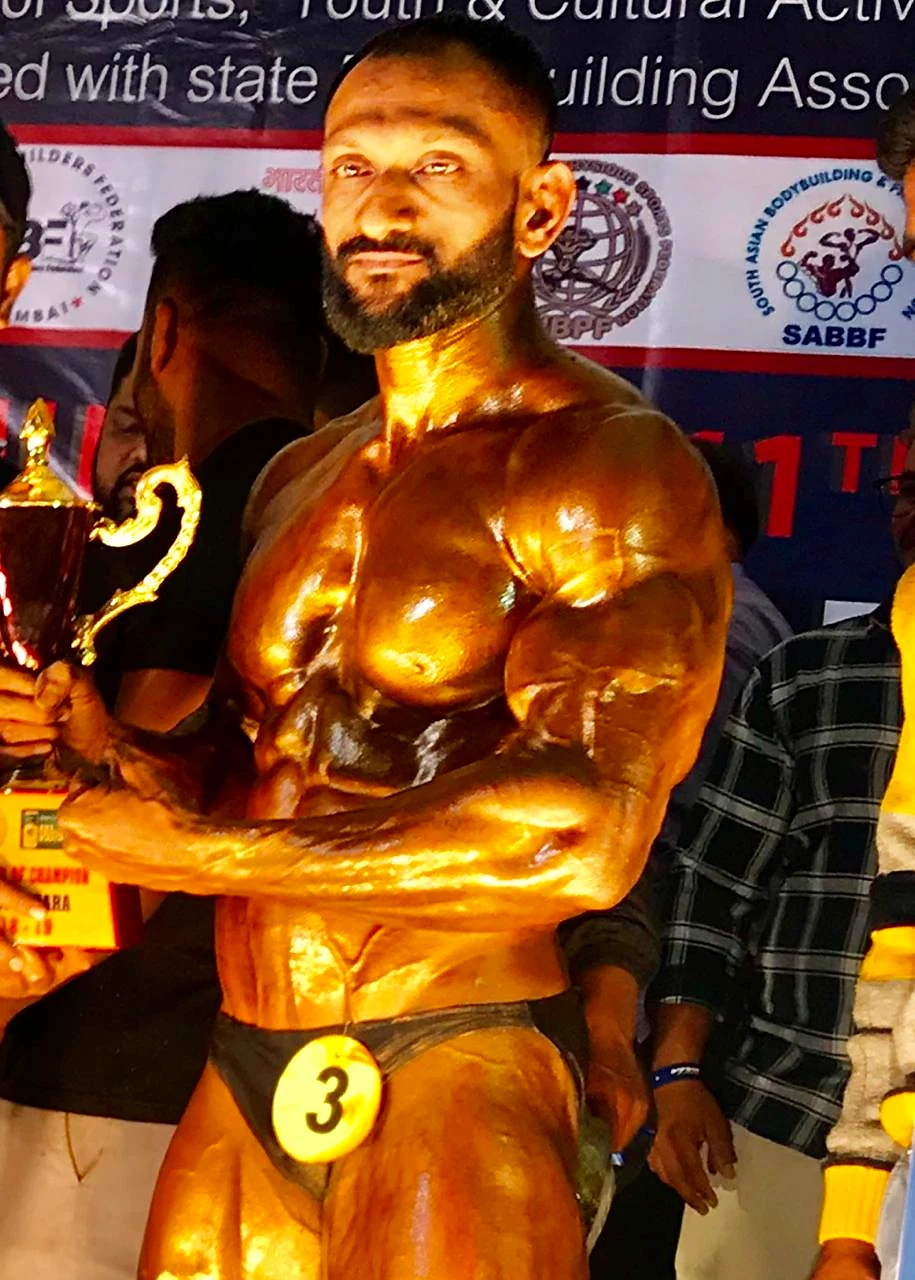
A practical walkthrough of your first bodybuilding show india route. Federation pick to stage day, built from lived contest experience.
My first meet was in Bhavnagar in 2001. I was underprepared and I placed nowhere. My first real stage win came at the Mayor Cup in Vadodara in 2016, with a first rank. In between those dates, I learned most of what this article contains. Later came a second at the B-Star Classic 2017. Then Gujarat State 2016-17 and 2018-19. And the Xotika Classic 2017-18 international in Mumbai. Nothing about prep is mysterious. It is long, quiet, and specific.
This is a 16-week outline for a first-time Indian competitor. It covers federation choice, show selection, the macrocycle, peak week, posing, stage day, and the rebound. The numbers here are aggregate ranges. A real plan is written by a coach who knows your body.
Indian federations: IBBF, IFBB, and the others
India has one federation recognised by the Ministry of Youth Affairs and Sports. That is the Indian Body Builders Federation, IBBF, operating since 1960 and affiliated with the IFBB internationally. It is also recognised by the Sports Authority of India and NADA, which runs drug testing.
The IBBF runs district, state, and national circuits. A Vadodara athlete usually starts at a district show, moves to Gujarat State, then Senior Nationals. Strong finishers at nationals can earn pro cards through IFBB channels or compete at Asian and world amateur events.
A handful of private promotions also run shows. The Xotika Classic in Mumbai, the Sheru Classic, and several Classic Physique promotions operate outside the IBBF calendar. Some accept international competitors. A few are untested, and the physique norms reflect that. Know what you are entering.
Categories vary by federation. IFBB Men’s Bodybuilding is split by weight. Common classes are up to 60 kg, 65 kg, 70 kg, and upwards. Classic Physique is split by height, using a weight cap tied to your height. Men’s Physique is also height-based, with six classes ranging from 170 cm to over 182 cm. A first-time competitor should pick the category that matches their current build, not the one they wish they had.
Testing matters. If you are natural, enter a tested federation or a tested category. If you are not, do not enter a tested one. That simple choice prevents the avoidable problem of a failed NADA sample.
Picking your first show
Your first show should be small. A district show or a local classic is the correct scale. State finals come after one or two smaller meets.
A smaller show gives you three things. One, shorter pre-judging in the sun so you are not flat by finals. Two, less competitive depth, so you learn the stage without getting buried in the line-up. Three, a travel radius you can manage without sleeping on a hotel floor the night before. I have seen first-timers travel overnight to a state show. They present a softer physique than they had three days earlier in the gym mirror.
Budget is part of this choice. Entry fees, tan, posing trunks, travel, and a coach’s time add up. A Gujarat-local show keeps the cost reasonable while the learning is the same.
Pick the show twenty weeks out. Register early. Then work backwards from stage date to set your start date for prep.
The 16-week macrocycle
Sixteen weeks is a reasonable minimum for a first-timer who is already lean enough to start. Research on natural prep suggests 12 to 28 weeks depending on starting body fat. Above roughly 15 percent body fat for men, or 22 percent for women, start 20 to 24 weeks out.
The macrocycle has four phases. Base, growth, cut, peak. Each has a clear job.
Base, weeks 1 to 4. This is the diagnostic phase. You measure body fat, take weekly photos, and test your lifts. Training is full-body or upper/lower at moderate volume. Calories sit at maintenance. The goal is not change. It is a clean baseline and honest data.
Growth, weeks 5 to 10. A small surplus of 150 to 300 kcal per day. Protein around 1.8 to 2.2 g per kg of body weight. Training shifts to a body-part split or push-pull-legs, six days a week. You push for small strength increases on your main lifts. Add a weak-point session, usually arms, calves, or posterior chain. At week 10 you should be two to three kilograms heavier than week 5.
Cut, weeks 11 to 14. A deficit of 400 to 600 kcal per day. Protein climbs slightly, to 2.0 to 2.4 g per kg, to preserve muscle. Cardio begins at 15 to 20 minutes, three days a week, and scales up only if the weight stalls. Training volume stays. Load drops when needed. Expect 0.5 to 0.8 kg loss per week, no more. Faster loss tends to cost muscle.
Peak, weeks 15 to 16. The stage week and the one before. Most of the work is already done. This phase is presentation, not construction. More on this in the next section.
A coach’s value is highest in the cut and peak phases. A gym trainer who watches you for an hour can spot patterns you cannot see in the mirror. As a personal trainer working with competitors, I have seen the same first-timer error across years. They cut too fast in weeks 11 to 13 and arrive flat and stringy at pre-judging.
Peak week fundamentals
Peak week is the most over-engineered part of prep. The research is clear that simple beats clever for a first-timer. A 2021 evidence review in BMC Sports Science, Medicine and Rehabilitation makes the point plainly. Keep variables minimal. Test any protocol in advance of the show.
The intent of peak week is glycogen supercompensation. For each gram of stored glycogen, the body holds roughly three grams of water. Loaded muscles look fuller on stage. Emptied muscles look flat. The trick is to not miss in either direction.
A simple first-timer protocol looks like this. Days six to four before the show, drop carbs to roughly 1 g per kg body weight while keeping protein and training. Days three to one, raise carbs to 4 to 7 g per kg from clean sources such as rice, potato, and oats. Sodium stays normal throughout. Water stays normal throughout. Do not dehydrate. Do not cut sodium below your habitual intake.
The case-study literature shows a common pattern. A three-day depletion, then three days of loading, with a slight taper the day before. Muscle thickness in these studies increases by roughly 2 to 3 percent versus pre-depletion. The effect is real but small. It cannot rescue a poor cut.
My 2016 Mayor Cup peak week almost broke me. I tried a dry-out protocol I had read about. I arrived flat and cramping. I still placed first that day, but it was closer than it should have been. Since then I keep peak week boring. You should too.
Avoid three first-timer errors. Cutting water in the last 24 hours. Loading on foods you have not eaten in weeks. Training heavy on the day before the show. All three flatten the physique.
Posing for first-timers
Posing is the skill most first-timers skip. It is also the skill that separates a conditioned athlete from a conditioned athlete who wins.
IFBB Men’s Bodybuilding has eight mandatory poses. Front double biceps, front lat spread, side chest, side triceps. Back double biceps, back lat spread, abs and thigh, and the most muscular. Classic Physique has a similar mandatory set, with a classic pose added. Men’s Physique stops at quarter turns, plus a front pose, with hands on hips and the other foot slightly forward.
The quarter turns and the line-up are where beginners lose ground. Learning to stand still, with the correct foot forward, lat spread, and a slight twist, takes weeks of practice. Not days.
A reasonable posing schedule is ten to fifteen minutes of practice, four to five times per week, from week four onward. From week twelve, a full posing round every second day, in front of a mirror or on video. From week fourteen, a tan-clad run-through in good light at least twice.
Shoes and trunks matter. Get the trunks six weeks out so you know they fit when leaner. Try the tan two weeks out, so the first coat is not on stage day. Practice your pump-up routine with bands, not heavy barbells, so you can use it backstage.
Stage day
Stage day is logistics, not training. The plan exists so you do not improvise.
Arrive at least two hours before athlete check-in. Bring your ID, entry confirmation, trunks, and tan touch-up. Pack oil or glaze, bands for backstage pump, a small towel, and simple food. Rice cakes with peanut butter, a banana, and a small bottle of water. Maybe a sip of a sugared drink before you step out. Nothing new. Nothing fried.
The pre-judging order is set by the organiser. You may stand in the sun. You may wait three hours between pre-judging and finals. Plan food for both blocks, and plan a quiet corner to rest. Do not watch other competitors pump up. It will change your timing.
Pump up 15 to 20 minutes before you walk. Bands for shoulders, chest, and arms. A few push-ups. Do not ruin your legs backstage. They stay warm from the standing and walking.
On stage, hit each mandatory as called. Hold two to three seconds. Do not rush between poses. Breathe. The judges score what they see, not what you rehearsed at home.
After finals, wait for the result with the line-up. Whatever the placing, thank the judges and the organiser. This is a small circuit. You will see the same people at the next show.
After the show
The post-show rebound is where most first-timers gain back everything in four weeks. The goal is a controlled return, not a blowout week.
A single meal celebration on show night is fine. The next day, go back to a structured intake, slightly above maintenance, with protein held. Cardio drops to two light sessions per week. Training continues at reduced volume for two weeks, then rebuilds.
Expect a water jump of two to four kilograms in the first 72 hours. That is normal glycogen and fluid returning. The scale settles in seven to ten days.
The emotional rebound is real. Competitors report a flat mood in the weeks after a show. You have been pointed at one date for four months. The day arrives and then it is over. Schedule the next goal in the first week after the show. A new strength block. An off-season hypertrophy focus. Another show eight to twelve months out. Not next month.
Debrief honestly. Look at your stage photos alongside your week-ten photos. Find your weak points. Write them down. The next prep starts with that list.
If you want a structured, coached prep, our competition prep service is built for this 16 to 24 week window. Weak points are addressed in the muscle gain block before prep. The diet and nutrition planning page covers the macro targets behind the phases above. The about page lists my own contest record, if background matters to you.
FAQ
How long before my first show should I start prep?
Sixteen weeks if you are already lean, roughly under 15 percent body fat for men. Twenty to twenty-four weeks if you are higher. Shorter preps tend to cost muscle.
Should I compete tested or untested for my first show?
Tested, if you are natural. The Indian federation circuit, IBBF, runs NADA testing at nationals. A tested local show at the district level is the cleanest first entry.
How much cardio should I do during the cut?
Start at 15 to 20 minutes, three days a week, only when the scale stalls. Scale up in small steps. Cardio is a tool to remove, not a punishment to add.
References
-
IFBB. General Rules for Bodybuilding and Fitness, 2023 Edition. International Federation of Bodybuilding and Fitness, 2023. Link
-
IFBB. Men’s Bodybuilding Rules and Weight Categories, 2023. International Federation of Bodybuilding and Fitness, 2023. Link
-
Indian Body Builders Federation. About and Affiliated Units. IBBF, 2024. Link
-
Peos JP, Norton LE, Helms ER, et al. “Peak Week Recommendations for Bodybuilders: An Evidence Based Approach.” BMC Sports Science, Medicine and Rehabilitation, 13:68, 2021. Link
-
Chappell AJ, Simper T, Barker ME. “Nutritional Peak Week and Competition Day Strategies of Competitive Natural Bodybuilders.” Sports, 6(4):126, 2018. Link
-
Escalante G, Barakat C, Tinsley GM, Schoenfeld BJ. “Peak Week Carbohydrate Manipulation Practices in Physique Athletes: A Narrative Review.” Sports Medicine - Open, 10:6, 2024. Link