15 Years of Coaching: What I Learned Competing Across India
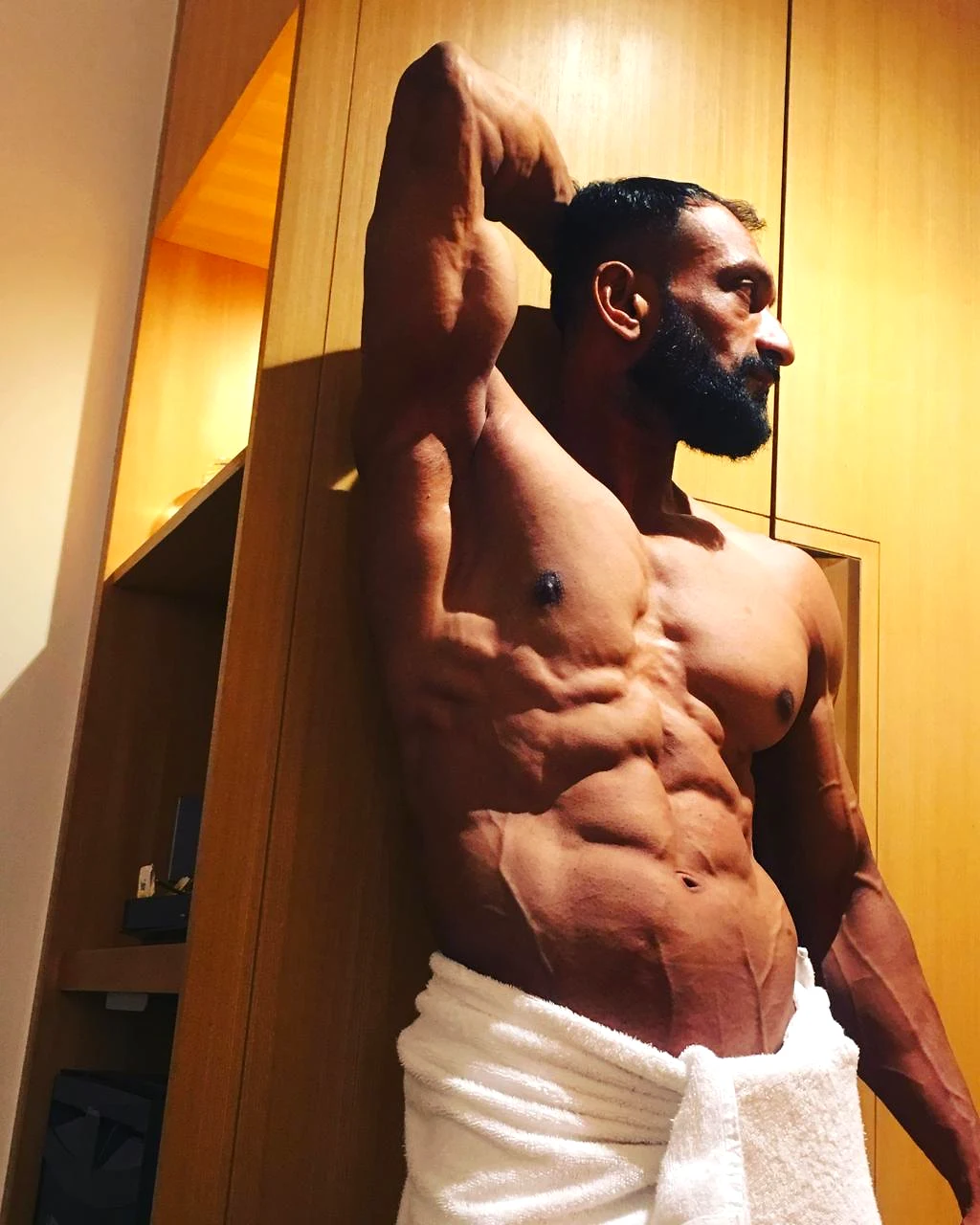
I am Santosh Salekar. I write this from Vadodara, where I was born, raised, and still coach. The bodybuilding coach experience india built into me came from many small stages and one or two large ones. This article is the longer version of that story.
I started competing in 2001. I have been coaching since 2010. The two roles teach different lessons. Competing teaches you what your body can take. Coaching teaches you what other bodies cannot. Most of what I write below sits at the seam between those two.
The 2001 state meet — what it taught me before I won anything
My first stage was the Madhyastha Winter Sports Meet in Bhavnagar, in 2001. I was around seventeen. I had been training for two years in a Vadodara gym. I had no coach, no plan, and no real understanding of what a peak week was.
I went to Bhavnagar because a senior lifter from my gym told me to. He said I had the frame. I trusted him more than I trusted myself. The bus ride was long and I barely slept on it. I remember being hungry and cold backstage.
I took first in my category that day. I should have been proud. What I felt instead was confusion. I did not know how I had won. I did not know what I had done right. The trophy went home with me. The lesson did not arrive for years.
That meet taught me the danger of accidental success. A teenager wins one stage and assumes the system works. The system was not a system. It was luck stacked on a frame and two years of stubborn training. If I had lost, I might have learned faster.
I went back the next year and placed nowhere. Then I won again at Madhyastha in 2003. The pattern was random because my method was random. That is when I decided to take it seriously. I began logging every lift. I began reading instead of copying.
The lesson I carry from that first stage is simple. Winning without understanding is worse than losing with notes. A first place teaches less than a fourth place that you can analyse. Most beginners I coach today want the trophy. I try to give them the notebook first.
I also learned that day how loud a small stage can feel. The hall in Bhavnagar held maybe two hundred people. To a seventeen-year-old in posing trunks, it sounded like a stadium. The first stage you stand on is always the loudest. Every stage after gets quieter, until the noise is just your own breathing.
Mayor Cup 2016 — what peak week almost cost me
Fifteen years after Bhavnagar, I stood backstage at the Mayor Cup Vadodara 2016. The Vadodara Municipal Corporation ran the show. I was thirty-three. I had thirteen years of competition behind me and a notebook full of corrections.
Six days out, I was at six percent body fat. I was sleeping four hours a night. I was water-loading on a strict schedule. I had stopped answering my phone two weeks earlier. A cousin was getting married that week. I did not go.
My wife handled the household. My family handled the wedding. I handled trunks, tan, and a posing routine I had practised in front of a mirror for ninety days. The trophy that came out of that week reads first rank. The cost behind it reads differently.
Two days after the show I could not climb stairs without cramping. I rebounded eight kilograms in a week. I slept eleven hours a night for a month. My lower back held up because I had built it carefully. My nervous system did not. It took two months to feel like myself again.
I do not regret the Mayor Cup. I regret not preparing the people around me for what peak week would be. I told my family I would be busy. I should have told them I would be absent. The honesty would have cost me less than the silence did.
When I coach competition clients now, I make them write a letter to their family before week ten. The letter says what will change, when, and why. It says when normal life resumes. That letter has prevented more relationship damage than any meal plan I have ever written.
A trophy is a private object. Peak week is a public cost. Anyone who tells you otherwise has not stood backstage at six percent body fat with a phone full of missed calls.
Why most coaches get competition prep wrong
I have watched a lot of Indian competition prep go badly. Most of it fails for the same three reasons. The first is the hero cut. The second is no posing practice. The third is no mental preparation.
The hero cut is when a coach pulls calories hard in the last four weeks to chase a stage-ready look. It works for one or two clients out of ten. The other eight arrive flat, soft in the wrong places, and slow on stage. A slow cut over twenty weeks beats a hero cut over twelve every time.
Posing practice is the part most prep programs skip. A client who can squat one hundred eighty kilograms for reps will still lose to a smaller athlete who knows their angles. I make competition clients pose for thirty minutes, four days a week, from week eight onward. Their physique on stage looks ten percent better than the same physique untrained.
Mental prep is the silent failure. First-time competitors are told what to eat and how to train. They are not told what backstage feels like. They do not learn how stage lights distort the mirror. They are not warned about a category change two hours before pre-judging. I walk every first-timer through three rehearsals of the day. The trophy is not in the gym. The trophy is in the rehearsal.
Templates are the other sin. A gym trainer who sells the same prep plan to ten clients is not coaching. They are billing. A real prep is rewritten every two weeks against weight, photos, and how the client feels in the gym. The plan adjusts. The standards do not.
There is also the failure to plan the rebound. The two weeks after a stage are when most damage happens. Clients gorge, sleep badly, and lose the conditioning they spent twenty weeks building. A coach who does not write the rebound into the plan has not finished the prep. I write the post-show fortnight before peak week even starts.
What 15 years of coaching taught me about clients
I have coached beginners, intermediates, and competition athletes. The three groups are not the same, and the way I work with each is different.
Beginners give the highest return per rupee in the entire industry. A beginner who learns form, eats Indian food well, and shows up four days a week will transform in twelve weeks. I have seen it happen too many times to doubt it. The gains in strength and shape during a first year are permanent if the habits stay.
Intermediates need patience, not novelty. Most stalled lifters I see are not undertrained. They are under-recovered and over-programmed. They have copied splits from imported magazines and from social media reels. The fix is usually less, not more. A clean four-day program with progressive overload outperforms a six-day split run sloppily.
Competition clients need realism. Most first-timers approach me wanting a national title. We talk about a district show first. The honest road is district, then state, then national. The dishonest road is selling a national plan to someone who has never stood under stage lights. I have refused more competition clients than I have taken.
The personal trainer relationship is also different across these three. Beginners need me visible — corrections every set, on the floor, beside the rack. Intermediates need me as an editor — programs reviewed weekly, not hovered over. Competition clients need me as a witness. Present at posing rehearsals. Present at the mirror at week six. Present at the show itself.
The biggest mistake beginners make
The single biggest mistake I see in new lifters is the chase for novelty over consistency. Indian beginners walk into a gym and want a new program every month. They watch a reel from an American influencer and switch their split the next week. They never stay long enough on one program to know if it works.
The second mistake is copying social media. A beginner does not need a Bulgarian split squat with a kettlebell on a balance pad. A beginner needs a back squat with a barbell, twice a week, for a year. The basic lifts look boring on a phone screen. They are still the basic lifts because they still work.
The third mistake is quitting at week six. The first month produces visible change because the body is responding to the shock of training. The second month is quieter. Strength keeps climbing but the mirror lies still for a few weeks. Most beginners read that silence as failure and stop. They are the closest to a real result when they walk away.
What I tell new clients is simple. Pick a four-day program. Run it for sixteen weeks. Track every set. Eat the same Indian food you were going to eat anyway, with one extra source of protein per meal. Do not change anything until the sixteen weeks are done. Then we measure, photograph, and decide.
The fourth mistake is comparison. A new lifter sees a five-year lifter in the same gym and assumes they should look similar in six months. The five-year lifter built that frame across roughly two thousand five hundred sessions. Comparison shortens your patience. Patience is the one resource a beginner cannot afford to waste.
The biggest mistake experienced lifters make
Experienced lifters fail in a different way. The biggest mistake I see is chasing personal records at the cost of form. A lifter with five years in the gym wants to add ten kilograms to their bench every quarter. The bar speed slows. The shoulder starts clicking. The form breaks down before the strength does.
The second mistake is refusing to deload. I have argued with intermediate clients more about deload weeks than about anything else. They feel that taking a planned light week is wasted training. They learn the truth in their late thirties, when a tendon decides for them. I program a deload week every fifth week. It is non-negotiable.
The third mistake is ignoring recovery. Experienced lifters pile on volume and skip sleep. They train through soreness that should have been a rest day. They drink one cup of coffee instead of eating a proper breakfast. The body keeps a ledger. The ledger comes due eventually.
A trained lifter has different needs from a beginner. The training stimulus is harder to earn. The recovery cost is higher. Sleep, meal timing, and deload weeks become more important than which exercise variation is on the program. Most experienced lifters know this. Few of them act on it.
The fourth mistake is moving away from the basics. After five years in the gym, lifters get bored of squats, presses, and rows. They drift to machines and isolation work because the basics feel old. The basics are not old. They are simply earned. A trained lifter who returns to a clean barbell program for a year almost always grows again.
What I would tell 23-year-old me
If I could send one letter back to myself at twenty-three, it would not say train harder. It would say sleep more.
I would tell my younger self to be patient. The state-level wins came at thirty-three, not twenty-three. The years between were not wasted. They were the price. A career in this sport is built across decades, not seasons.
I would tell him to keep competing even when the winning paused. The years between Madhyastha 2003 and the Vadodara District Bodybuilding 2016-17 run were quiet. I almost stopped twice. I am glad I did not. The Mayor Cup 2016 first rank came from those quiet years. So did the Gujarat State 2018-19 stage. So did the Xotika Classic 2017-18 in Mumbai.
I would tell him to log everything. Every lift, every meal, every photo. I lost five years of training data because I did not write it down. I now have clients who ask me what I did in 2008 and I cannot answer them with numbers. The notebook is the second-most valuable tool in this sport. The mirror is the first.
I would tell him to start coaching earlier. I waited until 2010 for my IIFSM certification. I should have started teaching what I knew in 2005. Coaching forces clarity. The fastest way to learn a thing is to be made to explain it.
I would tell him not to moralise effort. A client who trains three days a week is not lazy. A client who eats roti and dal is not weak. The judgement I carried at twenty-three made me a worse coach for a decade. Effort looks different in different lives. The job of a personal trainer is to meet the client where they live. It is not to drag them where I would prefer them to be.
The last thing I would tell him is this. The trophies will stop mattering. What will keep you in the sport is the client who deadlifts twice their bodyweight for the first time. Nothing on your own wall will compare to that. Plan your career around that, not around your own stage count.
References
- American College of Sports Medicine. (2009). Position Stand: Progression Models in Resistance Training for Healthy Adults. Medicine & Science in Sports & Exercise, 41(3), 687-708.
- Jäger, R., Kerksick, C. M., Campbell, B. I., et al. (2017). International Society of Sports Nutrition Position Stand: Protein and Exercise. Journal of the International Society of Sports Nutrition, 14, 20.
- Helms, E. R., Aragon, A. A., & Fitschen, P. J. (2014). Evidence-based recommendations for natural bodybuilding contest preparation. Journal of the International Society of Sports Nutrition, 11, 20.